Tonight at church services we watched the first episode of Following the Messiah from Appian Media.
I promised some friends to share a few of my pictures from the same locations, so here they are.
You can also watch the episode by visiting the Appian Media website. There is a link to the video on the first page.
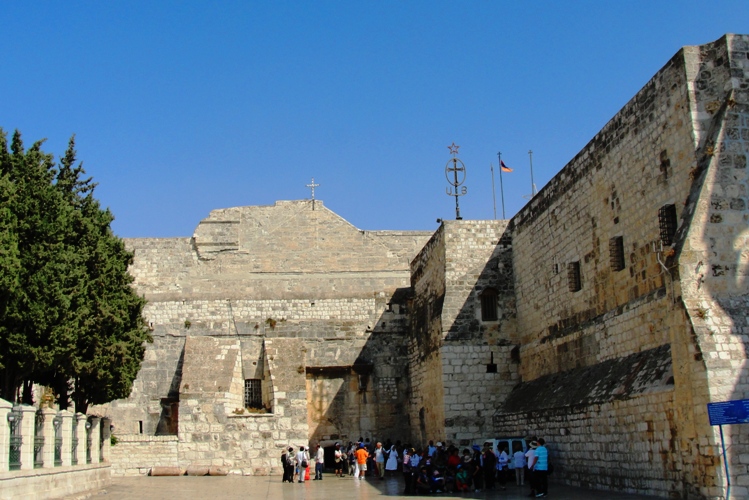 The Church of the Nativity is an interesting structure as it contains different sections for the Greek Orthodox and Roman Catholics. They both share sections of the Grotto of the Nativity, a cave that is the traditional location where Jesus was born.
 One of the places shown in the video is the traditional spot of the birth of Jesus which is marked with a silver star with fourteen points which represent the generations in the genealogy of Jesus.
So all the generations from Abraham to David were fourteen generations, and from David to the deportation to Babylon fourteen generations, and from the deportation to Babylon to the Christ fourteen generations. (Matthew 1:17 ESV)
The star is shown in the video, but here is a picture that shows the entire star.
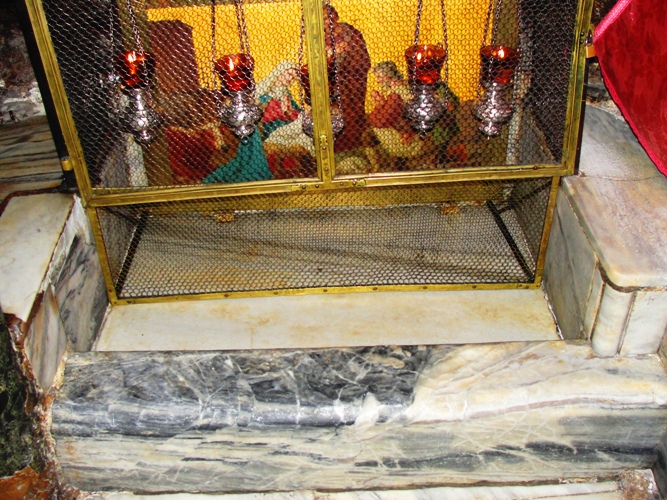 Just a few meters away from the traditional birth location is the traditional location of the manger where Jesus was laid. If you look closely you can see a painting behind the screen that shows Jesus laying in a manger.
Mangers were sometimes carved out of natural rock formations, which may have happened for the original. The manger here is made from marble, but of course was constructed much later.
There was a lady with the group of tourists just ahead of us who had a little baby doll that she laid in the manger before praying over it.
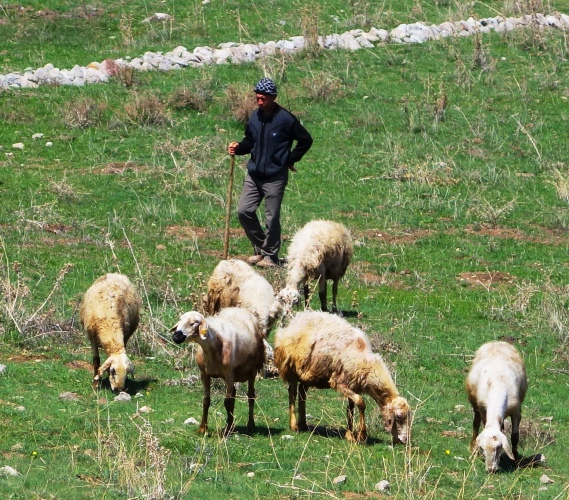 The video also had a section showing shepherds in the field. This picture is not from Israel, but from Turkey, but does show a shepherd watching part of his flock.
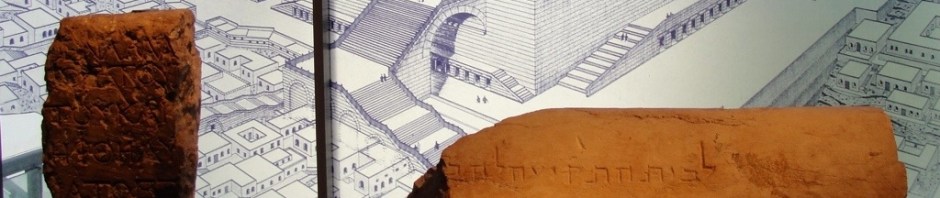
 The narrators talk about Joseph and Mary bringing Jesus to the Temple on the eighth day. They share information while standing on the Roman road that passed under the large arched stairway that is in the middle of this illustration.
The road is damaged from the large stones that were thrown down during the destruction of the temple in 70 A.D.
After the video I shared additional information and answered questions that others had. One of the things I shared was about these stones.
One of the stones is shown on the right in the picture above. It has an inscription on it that indicates it is where the priest would stand to blow the trumpet at the start of sabbath each week.
There is a replica of this stone in the place where it ended up on the road after being pushed from the top of the Temple Mount.
We really enjoyed watching the episode, especially as some of us are going to Israel later this year and will see some of the same places.
Steven
 Braman's Wanderings