This week in our Sunday morning class we discussed the final division of the the land of Canaan, the designation of the cities of refuge and also the cities that were alloted to the Levites.
The land for the last seven tribes needed to be apportioned, so Joshua sent men out to survey the land before casting lots to determine who would settle where.
After the lots were cast, the cities of refuge were designated. The cities of refuge were set up as a place for a person to flee if they had killed another person without knowing it or if by accident. The intricacies of how the cities of refuge were used are a bit complicated, so I will not be explaining them here. However, they were an important part of the justice system for both the Israelites and also any foreigners that lived in their land.
The six cities of refuge were spread throughout the land. There were three cities on each side of the Jordan River, and also divided between the cities of the three groups of priests. Most of you will easily recognize the names of two of the cities as they are important cities throughout the history of Israel. Shechem and Hebron were both visited by Abraham and are also mentioned many times in the Bible. You may also recognize the name Golan because of today’s Golan Heights. A couple of important battles took place at Ramoth Gilead and it was also the place where Jehu was anointed. Kedesh and Bezer are not as well known and barely get a mention in the Bible other than being cities of refuge.
During my trip to Israel and Palestine last year we were able to see one of the cities of refuge.
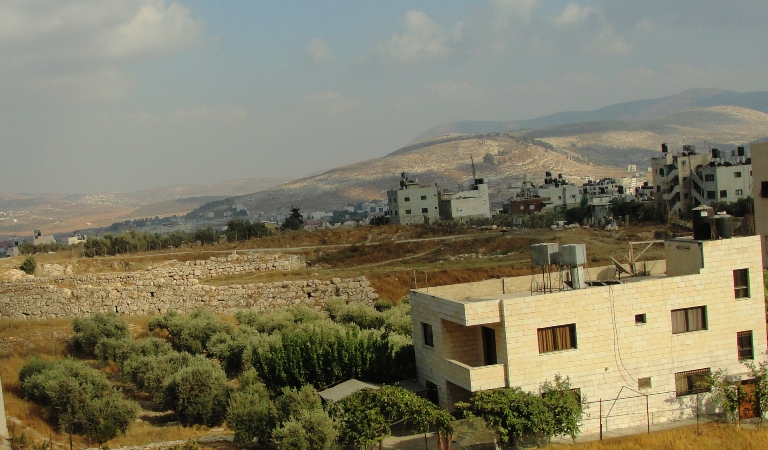
I took this picture of Tell Balata or Shechem as we were arriving at Jacob’s Well. We were near the end of a very busy day and did not have time to visit both Jacob’s Well and Shechem. However, it was nice to at least get a picture of the ruins of Shechem through the window of the bus. You can read more about our trip from Tiberias to Jerusalem in my earlier post: Up to Jerusalem
Jacob’s Well is right by Shechem and was the well that was used by the city. In the time of Jesus, Shechem was either known as Sychar or Sychar was a small village close to the well. Today the area is known as Balata and is part of the larger city of Nablus.

I would like to go back and visit the site of Shechem some day. I would also like to visit Hebron. Hebron is known as the City of the Patriarchs and is located in the southern part of Palestine in the Hill Country of Judea.
Kedesh is on the border of Lebanon and Israel. Tel Kedesh is being excavated and hopefully someday we will know more about it. Bezer and Ramoth-Gilead are in Jordan and unfortunately there is not much to see at either place. The place that is currently thought to be Golan is just inside Syria, so it would be difficult to visit.
We also talked about the different cities that were alloted to the Levites. The tribe of Levi did not get an inheritance, but were given cities to dwell in.
But to the tribe of Levi Moses gave no inheritance; the Lord God of Israel is their inheritance, just as he said to them. (Joshua 13:33, ESV)
The Kohathites, Gershonites and Merarites were all given cities among the different tribes. They were also in charge of the cities of refuge mentioned above. I will not list all of the priestly cities here as there are 48 of them. You can read Joshua 21 if you want to read all of the names :-).
Next week in class we will cover the final chapters of Joshua. We will then move on to Judges, which is one of my favorite books of the Old Testament.
Steven
If you want to catch up with the class, here are the previous posts:
To view links to the entire class series click on Walls of Jericho.
 Braman's Wanderings
Love the picture of Shechem!!! Very interesting …
The pictures so wonderfully bring the text to life, and make it much easier to picture what the area is like.
Pingback: In the Works | Braman's Wanderings
Pingback: Joshua’s Farewell | Braman's Wanderings
Pingback: Images for Sunday III | Braman's Wanderings
Pingback: Walking with Joshua | Braman's Wanderings
Pingback: Sunday Night Lesson | Braman's Wanderings