
The Pool of Siloam has been in the news this year as they have been undertaking an archaeological excavation to see how much more they can find out about the surroundings. I have watched the excavation process with interest as I have been to the area several times. The Second Temple Pool of Siloam was discovered in 2004 and I visited it on my first trip to Israel in 2013.
 One of my first views was as we entered the gate from the street and saw a large sewer line running through the site. The pool had been found while constructing this sewer line.
 In watching the excavation this year it does not look like they will find something like what is in the artistic representation on this sign from ten years ago. However, I am sure that they will find some interesting items that will help better understand the area.
One of the thoughts that I have is that there were only steps on the end of the pool where the pathway leads up to the Temple Mount. The other end was possibly a dam that was able to control the level of the water in the pool. This would have allowed for more water storage as the deep end could be much deeper than the shallow end where the steps were.
I wrote this statement back in June when I shared some pictures from my first visit to the site. I was thinking of this earlier this week when I saw a video where they mentioned that there is a new theory that there were steps on just one end of the pool.
While out walking tonight thoughts about the Pool of Siloam were wandering through my mind. What was it used for?
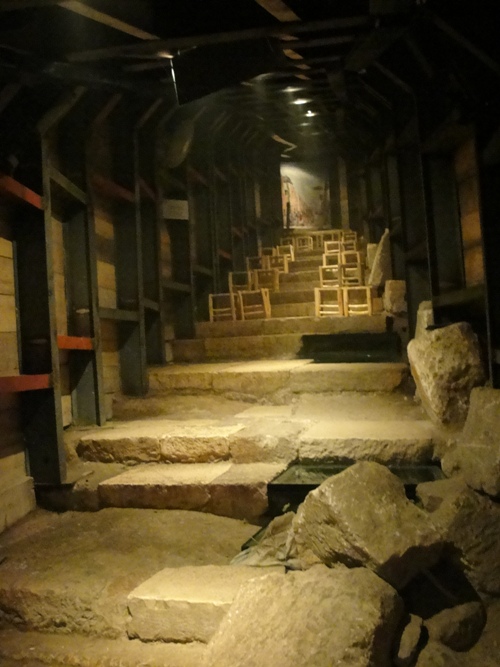 Back behind the area where the steps are there is a pathway of stone stairs that were found in the 1880’s. These have recently been investigated more fully and they are the beginning of a pathway that leads up to the Temple Mount.
One of the explanations I have seen in the past is that pilgrims would purify themselves in the Pool of Siloam and then make their way up to the Temple.
 The first time I visited Jerusalem, we did not walk up these stairs. Two years later I visited again and we were able to walk up these stairs and into what is know as the Herodian Tunnel.
 The tunnel goes below the Herodian Street that has not yet been opened to the public. The Herodian Street was a wide street lined with shops that pilgrims would follow up to the Temple.
My thought is that Pilgrims would not purify themselves at the Pool of Siloam as they would still have a long climb up to the Temple. I believe they would have then ritually purified themselves closer to the Temple. The Pool of Siloam would not have what was need for the purification rituals, and if they cleaned themselves there it would have been just to remove the dirt from a long journey.
 The Herodian Channel which ran below the street would have drained water from the Temple area where a large amount of water was needed for purification and sacrificial rituals.
My thought is that the Herodian Channel would bring water that was clean enough to use for irrigation or cleaning, but would not be clean enough to drink. Similar to today where water used to irrigate parks and landscaping is often not purified to the same standards as drinking water.
Would they have used the Pool of Siloam to capture this water and hold it to be used for irrigation and other purposes?
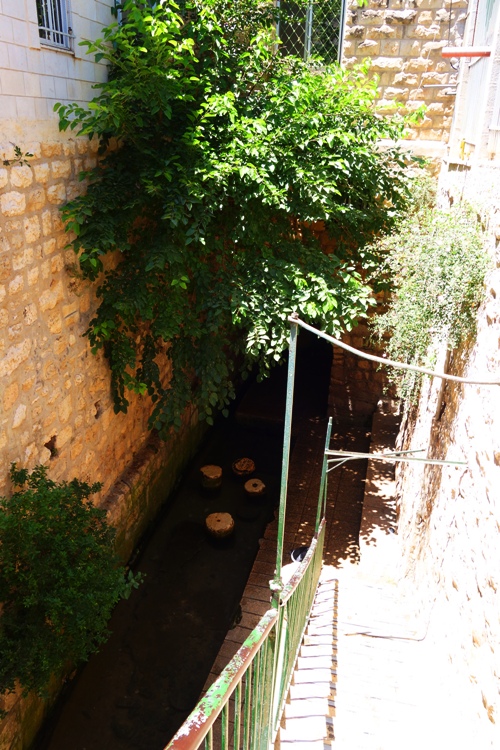 The outlet of the Siloam Tunnel is nearby and this could be used for drinking water. You would not have had all the tourists walking through it like you have today. 🙂
 The layers of steps in the Pool of Siloam would have allowed access to the water when the retention pool did not have as much water in it.
It will be interesting to see the results of the excavations that are being carried out and what more they find.
Are there steps only on one side like an old diagram from the early 1900’s shows?
Steven
WWRI
 Braman's Wanderings
Siloam
cjsmissionaryministry@gmail.com