Sometimes you just need to write about something to get it out of your head.
In this case it is the poor ruling in a recent Jeopardy! match. In a recent Final Jeopardy they were looking for Who are Beatrice and Benedick?
The clue was something along the lines of what romantic couple had names that both had a meaning of blessed.
Two of the contestants answered Who are Romeo and Juliet? which was definitely wrong. The third contestant answered Who are Beatrice and Benedict? He had crossed out Benedict and wrote it again the same way. This was ruled as being wrong and the contestant, who had won nine previous games, then lost the match based on the bids of the other contestants.
 That he was ruled against puzzled me and I had to go back and watch it several times to understand why it was wrong.
We have always been told that spelling does not matter in Final Jeopardy, so why did it matter this time? It came down to Benedick and Benedict not sounding the same, so the two spellings are not phonetically the same.
This made me think about why this was ruled against since he obviously knew the right couple. There are no other couples that even come close to being the same.
 Several thoughts came to mind.
Benedict most likely should have been the spelling at the time, but Shakespeare was notorious for spelling things wrong.
The modern meaning of the word benedick comes from this play.
Benedict is not always pronounced with a ‘T’ at the end. Many times the ‘T’ is silent.
The root word for blessed in Latin is Benedictus which has a ‘T” so Benedict should be an accepted spelling.
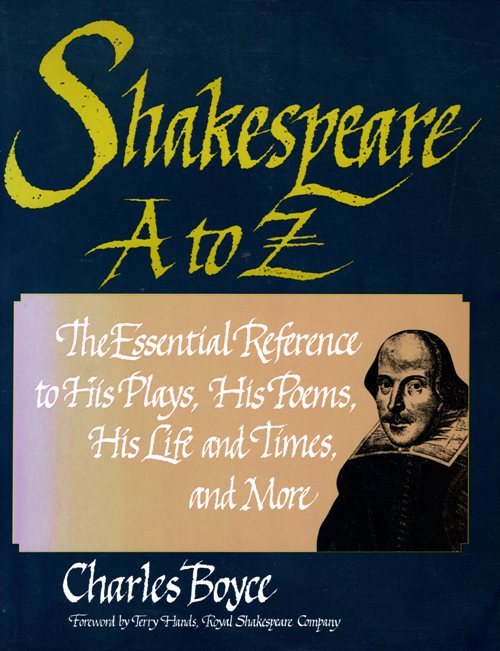 I decided to look at one of the standard reference books for Shakespeare.
Here is what Shakespeare A to Z: The Essential Reference to His Plays, His Poems, His Life and Times , and More by Charles Boyce.
Benedick, a common name in medieval England, comes from the Latin Benedictus, meaning ‘blessed’; he is thus appropriately matched with Beatrice (from Beatrix, or ‘she who blesses’). Shakespeare’s character has become so firmly entrenched in the imagination of generations of readers and theatre-goers that his name, sometimes spelled ‘Benedict”, has become a common noun meaning a newly married man who has long been a bachelor.
In the end, the win streak was over for the contestant and Jeopardy! goes on.
I was disappointed this last week when a contestant was not ruled against when the name of a sitting senator was mispronounced. Was this the same person? Does pronunciation matter as much as spelling?
This really brings up an interesting point. Many of the answers are known from memorizing lists of things, and for many there is no deep knowledge about some of the subjects that they simply know facts about.
I could go on and on, but then I may be just be making Much Ado About Nothing.
Steven
WWRI – Written With Real Intelligence
 Braman's Wanderings